


The Municipality of Valencia, through the CEMAS (World Center for Sustainable Urban Food), has promoted a new phase of Magnus Project, aimed at avoiding food waste in meeting tourism and improving sustainability.
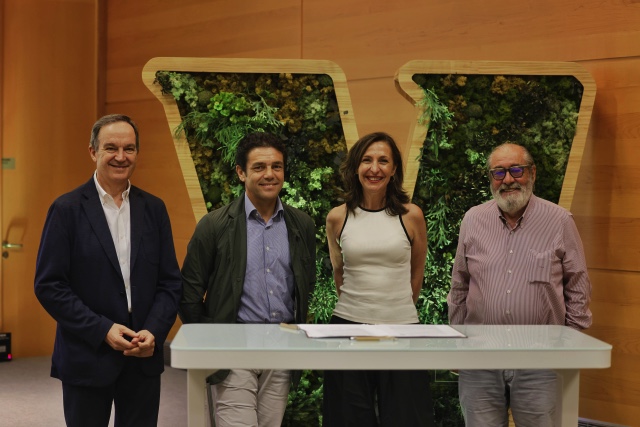
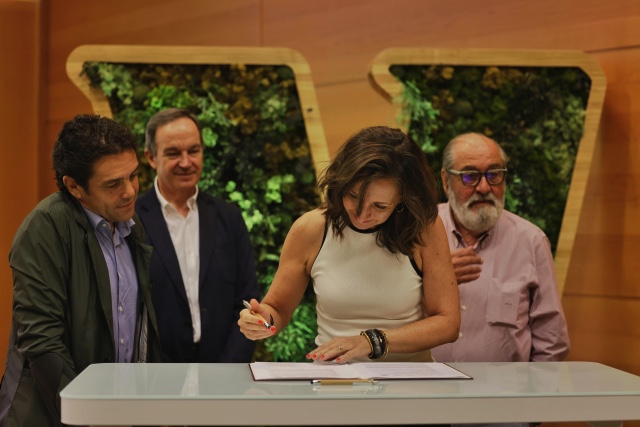
the Councilor for Climate Improvement and Energy Efficiency and President of CEMAS, Carlos Mundina, has signed the Collaboration Contract from the center with the Palacio de Congresos, the Lluís Alcanyís Foundation (Universitat de Valencia) and the restoration company Gourmet Catering & events.
The agreement represents a new phase of the MAGNUS project (magnitude, nutritional value and sustainability), based on the advice of CEMAS expert staff on food waste and sustainability in event tourism. From the City Council of Valencia they remember that the Palacio de Congresos has implemented the Magnus project, a Tool designed to evaluate and reduce food waste during events, with the aim of contributing to a more sustainable and responsible tourism.
For the mayor Carlos Mundina, president of the CEMAS Foundation, “it is a project that represents a great advance towards the minimization of food waste in the meeting tourism sector, in which the Palacio de Congresos is positioned as a reference space”.
In its first phase, the Magnus project included an initial diagnosis, from which a measurement protocol was developed, whose pilot project began to be implemented at the end of 2022 and from which important results were extracted: the drafting of proposals for improvement to reduce and prevent waste food; the systematic review of the nutritional footprint index, the conclusions of which have been published in the journal Foods-MDPI; and the energy-nutritional evaluation of the most demanded menus.
Practical decalogue
For this new phase of the project, Carlos Mundina explained, new and ambitious objectives have been established: the implementation of training For autonomous measurement of Food waste, the search for healthier menus at no additional cost and the creation of a decalogue aimed at event organizations for Promote awareness and prevention.
It will also work actively to ensure that foods suitable for consumption are donated to assistance entities, and also on useful waste for gardening, so that they can be transformed into compost.
The Palacio de Congresos has highlighted the challenges posed by the problem of food waste at a global level, a challenge that requires comprehensive efforts throughout the food supply chain, especially in sectors prone to waste such as Horeca (hotels, restaurants, cafeterias).
“In MICE tourism (meetings, incentives, conventions and exhibitions), where gastronomy is one of the main attractions, Food services that are neglected during work meetings contribute significantly to food waste”, they have pointed out.
In this context, the Magnus project focuses on food waste during conference events at the Valencia Congress Center (Spain), a study quantifies waste, classifies them by food groups, calculates the potential number of individuals who could feed on food discarded and evaluates energy and nutritional values.
The study suggests using waste for vermicomposting or composting as sustainable waste management alternatives.