


Se celebran more than 150 events each season in this enclave with five centuries of history.
Only three of the five Cartujas that were in the Valencian Community have managed to survive the passage of time. One of them, in addition, has left behind its function as a monastery to become a perfect space for weddings and exclusive events.
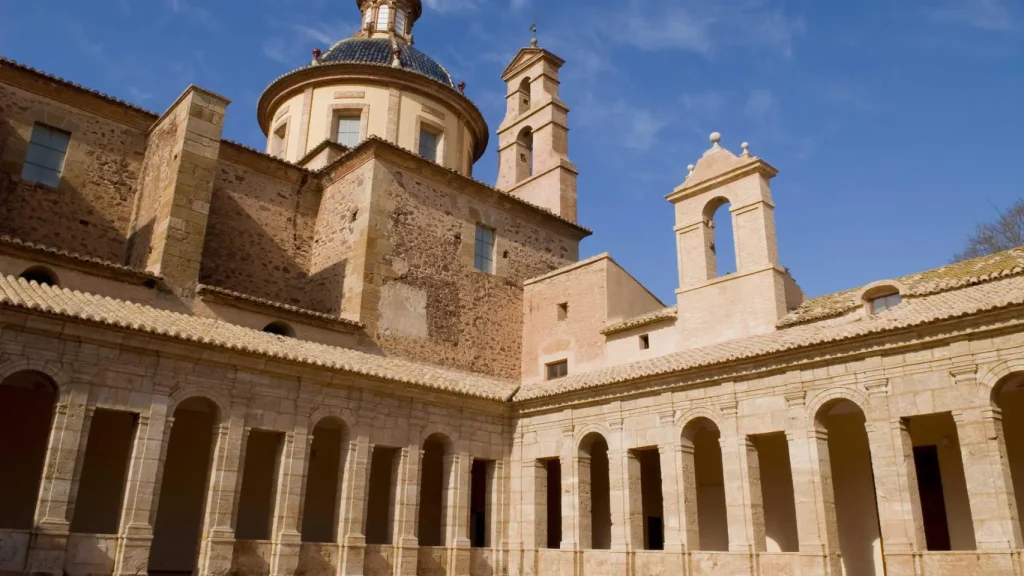
It’s about the Ara Christi Charterhouse, in the Valencian municipality of The Puig. A spectacular historic building, declared an Asset of Cultural Interest, of almost 3,000 square meters and an imposing cloister of 5,000.
The building with five centuries of history behind it stands out, in addition to the cloister, for the dome of the church, typical of the Mediterranean area. Its church has a large central nave and six side chapels..
The iconic construction has two smaller cloisters (one of them covered), a refectory, a mirror room and a front garden. It allows to host events of up to 3,000 people.
This place with lots of history and beauty, managed by Gourmet Catering & Exclusive events, has been chosen by the Fallera Mayor in Valencia of the year 2014, CARMEN SANCHO DE ROSA, to celebrate their wedding last weekend.

The space, since July of this year, has been part of the Valencia Premium Business Association, which brings together under the same seal the most exclusive tourist offer of the Valencian Community, as announced by the company that manages the space.
“Its unique and emblematic architecture, its accessibility from the city center, its infrastructure and technological endowment and the extensive and proven experience of the team have managed to overcome the requirements of excellence,” they add.
In La Catuja they celebrate, according to their data, More than 150 events each season. The wedding of the world champion Ivana Andrés or the Louis Vuitton party of the America’s Cup of 2007. Also the presentation by Gwyneth Paltrow of a Hugo Boss perfume.

It was also the place chosen for its link by The councilor of the PP in the Valencia City Council, Juan Carlos Caballero, and his partner, Javier Zamora. In 2023 alone, 89 weddings were celebrated.
historical place
Ara Christi Charterhouse was built in the 16th century by the architect Cartujo Fray Antonio Ortiz and under the protection of the Roig family of Valencia.
A community of monks dependent on the Cartuja de Porta-Coeli, from Serra, was installed. For a time it was in operation as a religious building and many communities of friars, monks and nuns passed through it.
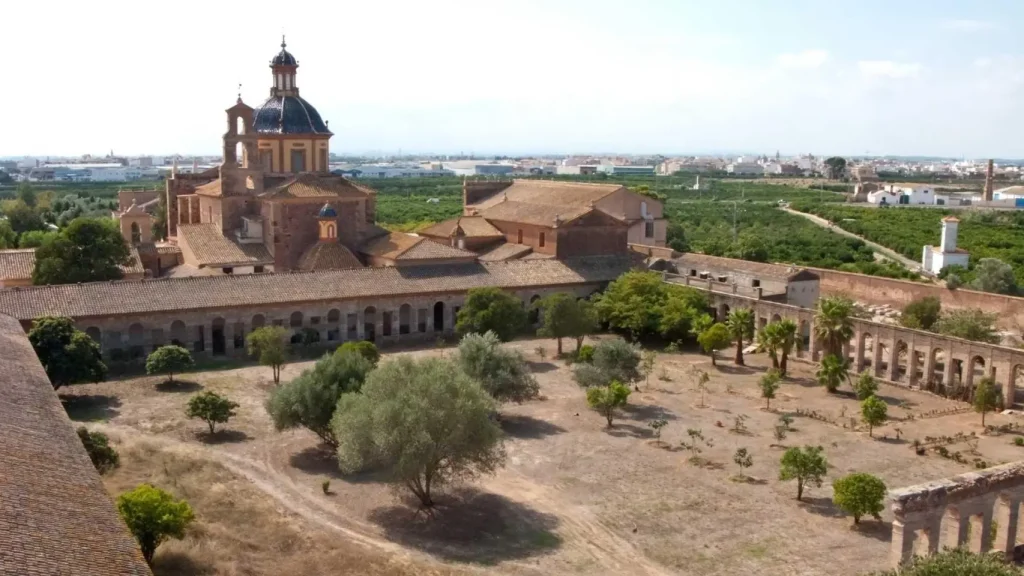
According to the report “The Valencian Cartujas and their historical figures” of the Royal Academy of Valencian Culture, the order arrived at the kingdom of Valencia in the year 1772 and for four centuries it was implanted and grew up in Valencian territory until it founded five Carthusians. Of these, only three are still standing.
One of them is that of El Puig, just 30 minutes from the center of Valencia.
“The story of Ara Christi begins on November 2, 1582, when he makes a will Elena Roig, a lady belonging to a wealthy family from the city of Valencia and widow of the Valencian gentleman Gaspar Artés”, reads the study.
Elena Roig when she died in 1585 left some properties that she had near El Puig to the Carthusian order to found a monastery there with the name of Nostra Señora de Ara Christi and on the condition that the new house does not depend on another monastery, but be independent.
“From then on, the life of the new monastery begins, not without complications due to the lack of economic contributions and because the founder’s inheritance did not include any income for the maintenance of the monastery,” adds the study of the cultural entity.
For this reason, the first years of the Cartuja were hard, marked by economic precariousness. This situation changed after 1600 thanks to the inheritance of a bishop and the donations of a notary, which allowed the purchase of adjoining farms and the construction of the cloister. In 1615, the construction of the new monastery, which became “one of the most unique works of Valencian religious architecture of mid 17th century for its advanced constructive repertoire and for its innovative ornamental program”.
In 1835 the Cartuja passed into private hands and in 1996 it was declared an Asset of Cultural Interest, with the category of Monument.
You can read here the full article.