

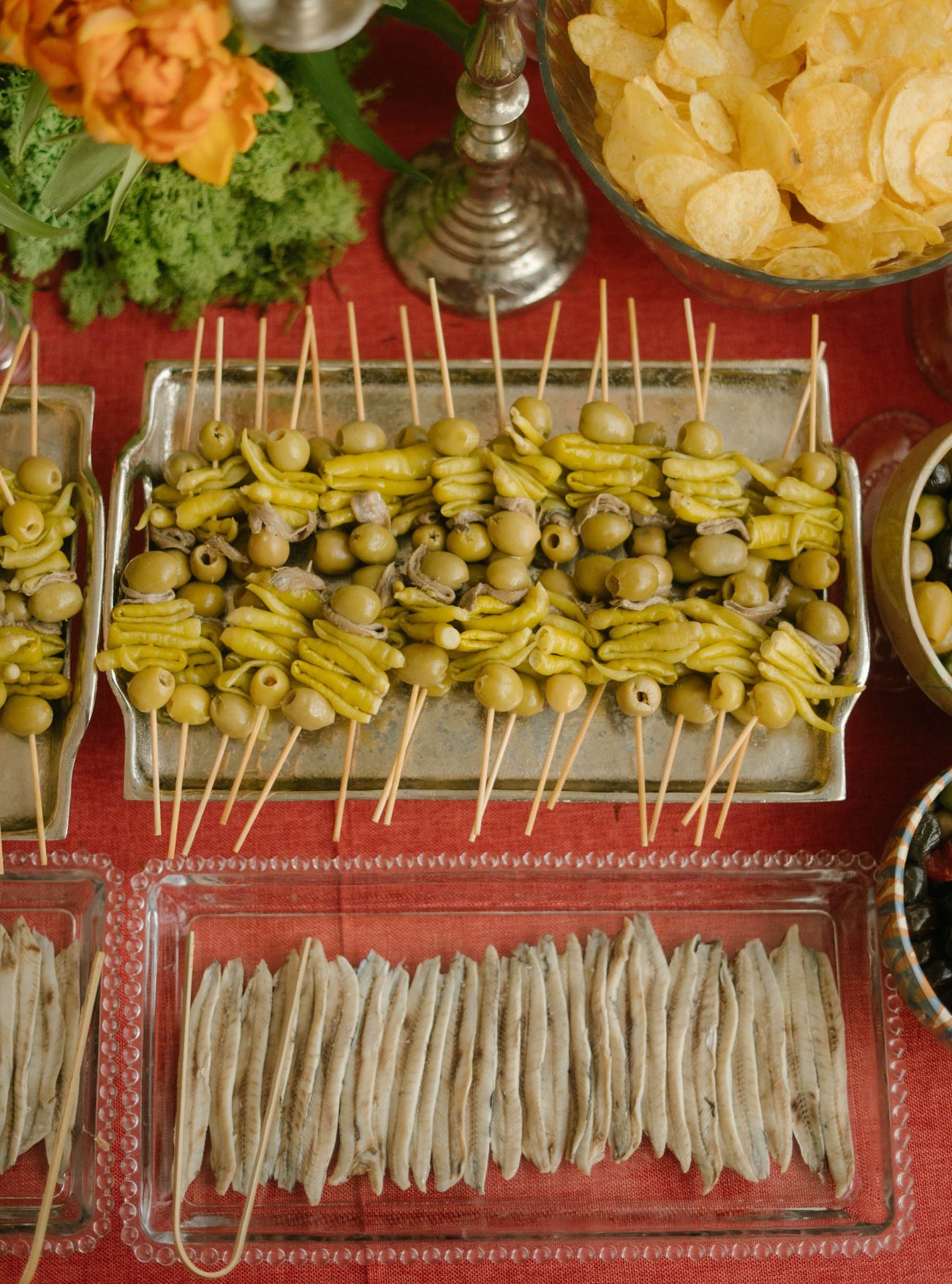
Gildas, fuet, and pulpo a feira: how local flavors have made their way into 2025 weddings


Gone are the sushi buffets, Mexican tacos, or quail eggs that ruled the 2000s. Today’s weddings are marking a paradigm shift: the wedding aperitif is becoming more Spanish than ever.
The trend points to the local, the Mediterranean, and the traditional. Classic recipes—reinterpreted, carefully crafted, and zero-kilometer—have become the new gastronomic luxury. It’s an aesthetic, cultural, and ethical choice, because relying on local suppliers reduces travel, minimizes carbon footprint, and revitalizes local economies.
“Young couples have deeply internalized the value of local products,” says Ángela Cócera, Director of Spaces at Gourmet Catering & Eventos, one of the leading companies in the wedding sector. “More and more, they ask us for something authentically Spanish, something that represents them and celebrates the flavors of our land. We’ve even created a line of bravas and another of Spanish omelette, and they have been a resounding success. Additionally, we notice a growing sensitivity toward responsible proposals: less waste, more respect for seasonality, and the natural cycles.”
The Reign of the Spanish Aperitif
According to data from Gourmet Catering & Eventos, gildas, torreznos, Burgos blood sausage, fuet, Cantabrian anchovies, and pulpo a feira are among the most requested items. What was once associated with informal tapas is now a full trend.
The undisputed star of the new wedding cocktail is the vermutería: a Mediterranean-style table featuring pickled mussels, premium olives, marinated anchovies, fuet slices, and crispy torreznos. An emotional journey through Spanish appetizers that evokes nostalgia… and is extremely current. This type of proposal also supports product traceability, a growing demand among couples who want to know where each ingredient comes from.
Seafood stations are also gaining ground, with grilled razor clams and scallops, pulpo a feira, or a Cantabrian anchovy buffet over sobao pasiego and butter. All accompanied by the essential live Iberian ham carving, now a gastronomic ritual. The focus on local species and traditional fishing methods is another key element shaping the new sustainable luxury.
Traditional Cuisine, Contemporary Creativity
Far from being purely classic, this return to origins is inspiring creations that reinterpret traditional flavors with a modern aesthetic, such as Requena fuet tartare, ‘Almussafes’ macarons with sobrassada and onion, or anchovy belly with Parmesan cream and grapes. Culinary innovation coexists with a responsible approach that prioritizes seasonal ingredients, reduces waste, and makes the most of every product.
In a context where zero-kilometer, sustainability, and local products are gaining ground, choosing a Spanish aperitif is also a statement of intent. Couples in 2025 claim what connects them to their roots: an authentic, conscious, and identity-rich celebration. Increasingly, they look for suppliers with active sustainability policies that address everything from efficient waste management to donating food surpluses.
“Behind every gilda, every torrezno, or every red prawn, there’s a story, a territory, and a way of understanding luxury from authenticity,” concludes Cócera. “And today, that is what couples value the most.” A luxury no longer measured only in sophistication, but in positive impact.

