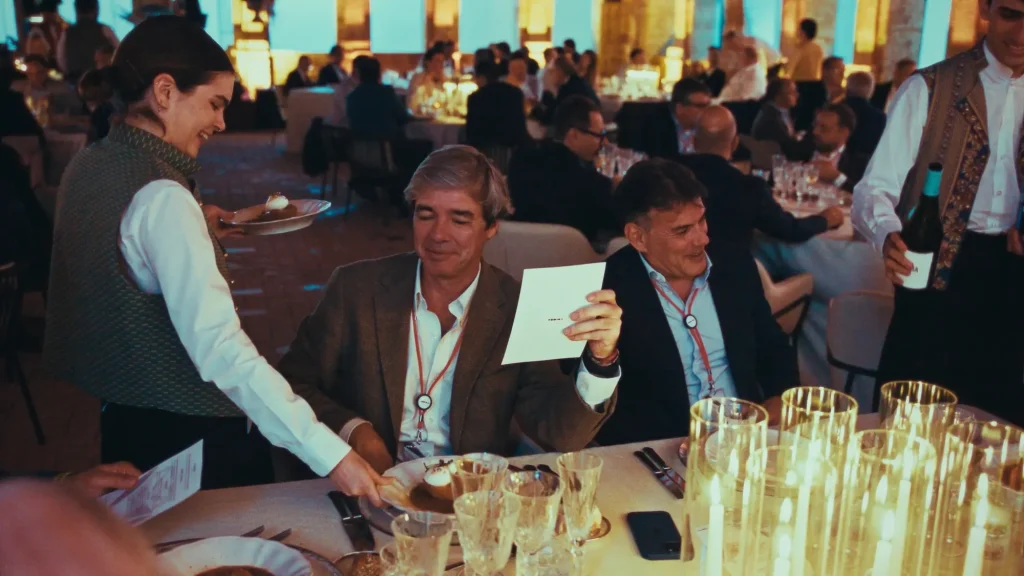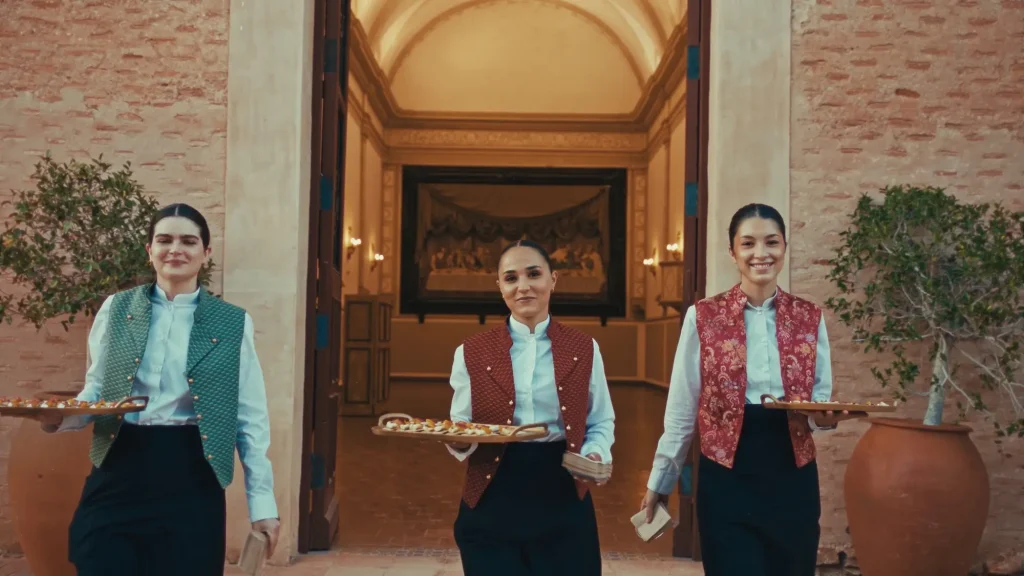


Behind every dish that reaches the table at a wedding, a gala dinner or a conference, there is work the guest never sees: product selection, kitchen trials, logistics planning and a team that coordinates every stage. At Gourmet Catering & Eventos, every dish is born in our production centre and finds its meaning at the table, when it becomes part of a moment guests will remember. Between one point and the other lies a carefully crafted journey, and today we want to tell you what it looks like.
A catering company in Valencia with more than 75 years of history
Gourmet Catering & Eventos is a family-run catering company in Valencia, now led by the third generation. Our story began in Valencia’s historic Noel establishments and spans more than 75 years of culinary craft.
Today, that experience translates into more than 2,500 events a year, including over 350 weddings, for more than 360,000 guests. In 2025 we received the National Hospitality Award for Innovation, granted by Hostelería de España. That same year we also received the Tourism Human Capital Award at the Premis Turisme Comunitat Valenciana, the Randstad Foundation Award for Workplace Inclusion (SME category) and the European Green Capital Award for Best Practices in Sustainable Tourism. At the Eventoplus Awards, we were named Best Catering Company in Spain in 2024 and won bronze in 2025 and 2026.
Behind those figures is a way of working that starts long before the event: in the kitchen.
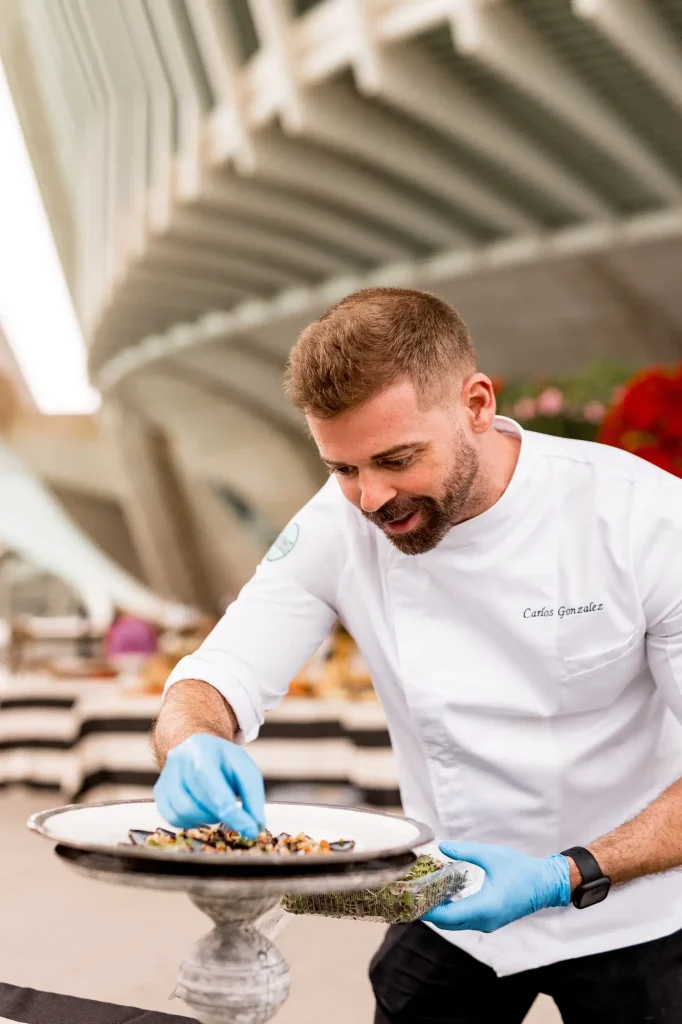
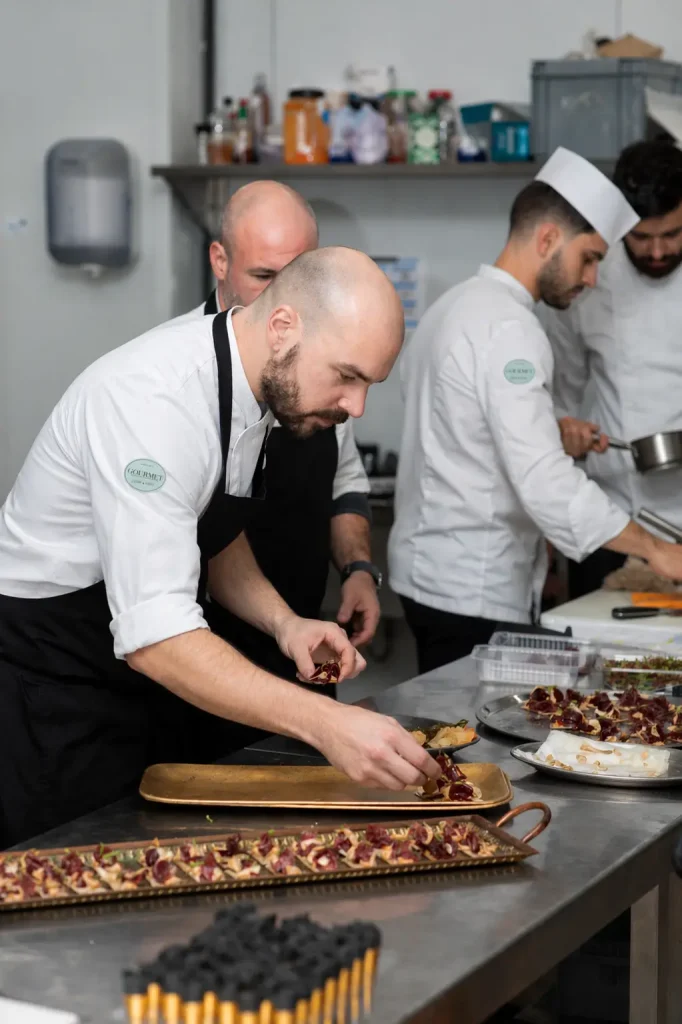
Our own production centre of more than 1,600 m²
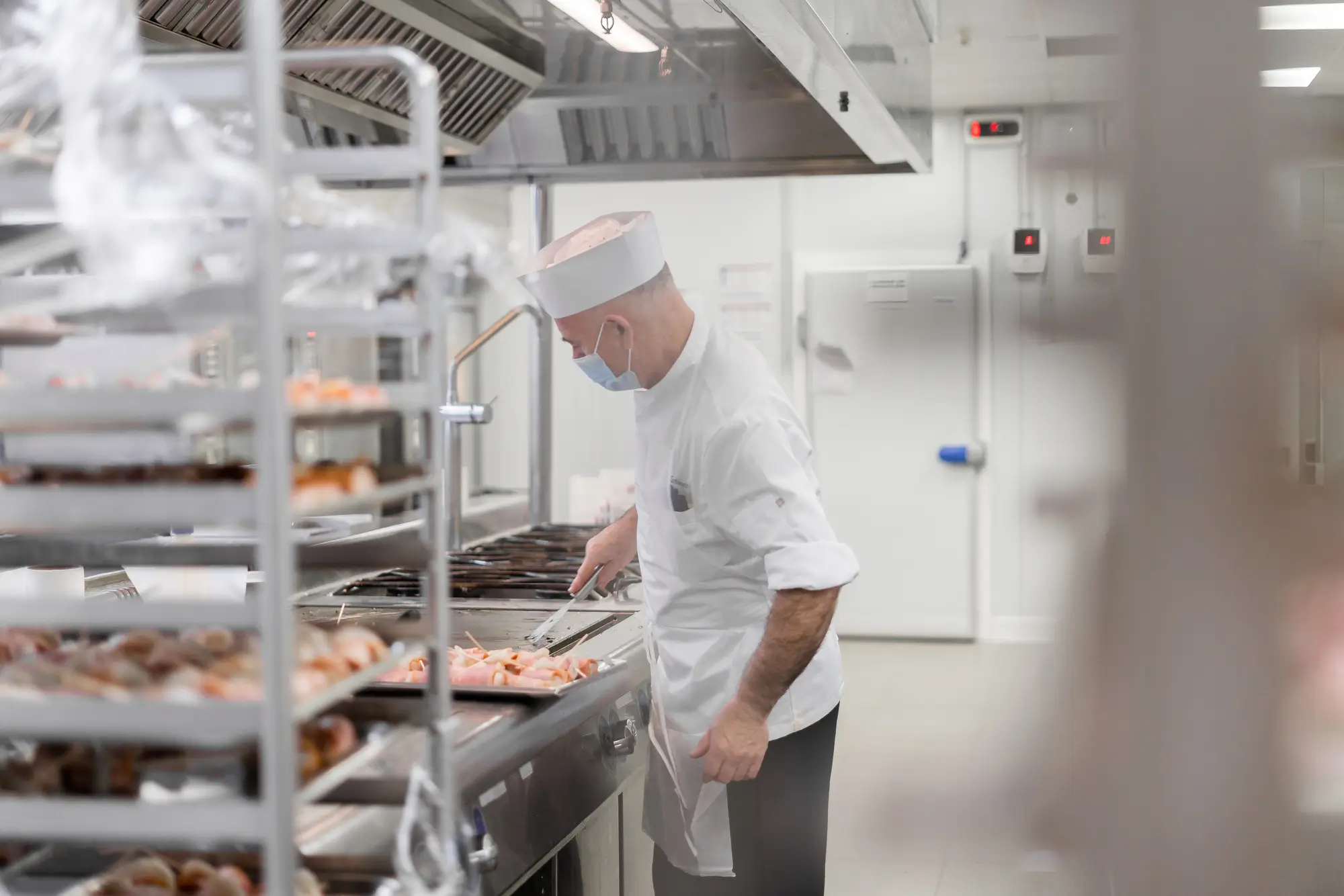
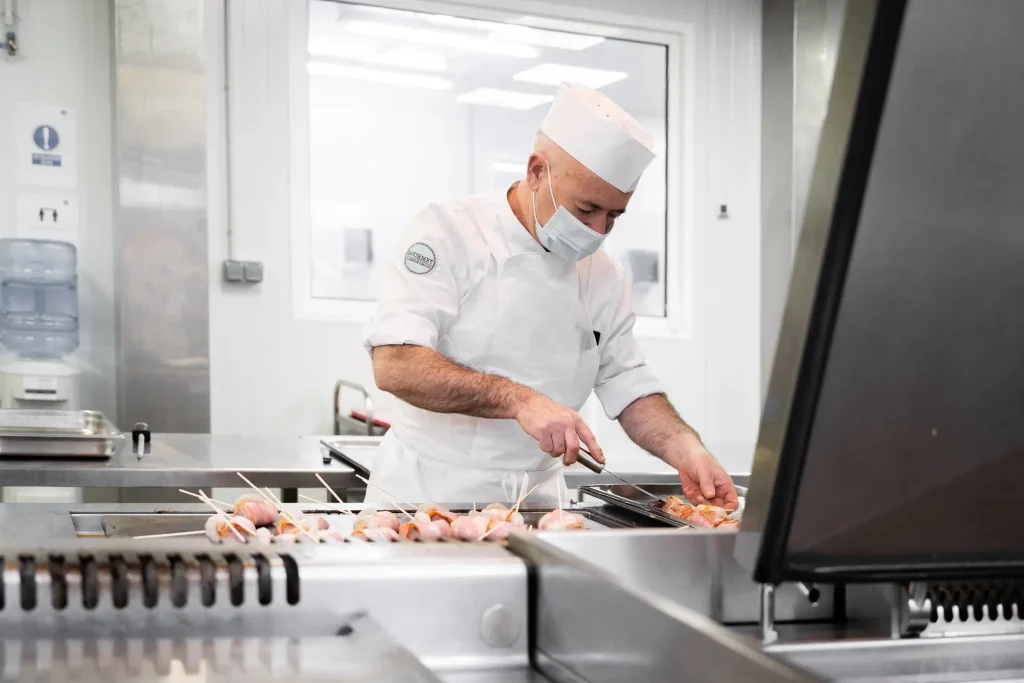
It all starts in Picanya (Valencia), at our own production centre: more than 1,600 m² where every proposal takes shape before it reaches the celebration. There, every dish is tested, refined and cooked with the rigour that a premium experience demands. The centre runs on 100% renewable energy and a self-consumption solar installation that has delivered 28% energy savings, because caring for what we serve also means caring for how we do it and for our surroundings.
Having our own central kitchen allows a catering company to maintain the same high standards at a small cocktail reception and at an event for more than 3,000 guests. The first stage of preparation takes place here; the dish is then finished in the kitchen at each venue, just steps from the table, so that it arrives exactly as it should.
Quality, traceability and IFS Progress Food certification
There is a part of the work that guests never see, but which lies behind every dish: food safety. Our Quality and Food Safety Department applies defined protocols and control and traceability systems that accompany every preparation, from the moment the product enters the kitchen until it leaves for the event.
We were the first catering company in Spain to obtain IFS Progress Food certification, an international quality and food safety standard. In our 2025 audit we achieved a score of 97.32%, a result that reflects the high standards we work to every day.
Seasonal, local produce as our starting point
Every menu starts with the produce. Our cuisine is rooted in Mediterranean tradition and works with seasonal, local produce: more than 70% of our fruit and vegetable suppliers are based nearby. It is a way of cooking that respects the land and that you can taste on the plate.
That is why a wedding menu in May looks nothing like a company dinner menu in December: the vegetables, fish and fruit change, and with them the dishes, the aromas and even the way they are served.
On that foundation, we incorporate contemporary techniques and adapt each menu to guests’ needs, with vegetarian, vegan, gluten-free, lactose-free, halal or kosher options. Every alternative is prepared with the same care as the main menu.
How a tailor-made menu is designed
We do not work with set menus. Every menu is designed from a conversation with the client, in which a single point of contact gathers the purpose of the event, the guest profile, the venue and the format: coffee break, cocktail reception, banquet, live cooking, food stations or immersive experiences.
From there, the kitchen team proposes, tests and refines until they find the menu that fits the event. The result is an all-inclusive proposal, in which food, table service and coordination are planned together from the very beginning.
From concept to experience: the Silk Road case
A good example is The Silk Road, the event we designed for TESYA Group at La Cartuja de Ara Christi, which won bronze for Best Catering at the Eventoplus Awards 2026.
The starting point was a concept: the Silk Road as a symbol of exchange, encounter and connection between East and West. The Carthusian monastery became the setting for a journey in which food and staging had to speak the same language. Every decision, from the menu to the staging and the service, followed the same common thread.
To achieve this, the kitchen, creative, production, logistics and service teams all worked in the same direction. In this way, catering for corporate events becomes a communication tool: guests receive the brand’s message through what they taste, too.
Menus with their own identity: weddings, companies and themed proposals
The same method applies to every type of event catering. At weddings, the menu reflects the couple’s tastes and their guests’ profile, whether at one of our exclusive venues or at a private estate.
For companies, menus can incorporate corporate identity: brand colours, a theme linked to a launch or a nod to the client’s sector. For private celebrations, such as anniversaries, christenings or first communions, each proposal is designed with its own character.
Themed proposals also reach our restaurants, such as the menu with Andalusian roots and a French accent that Contrapunto Les Arts created for the premiere of Carmen at the Palau de les Arts.
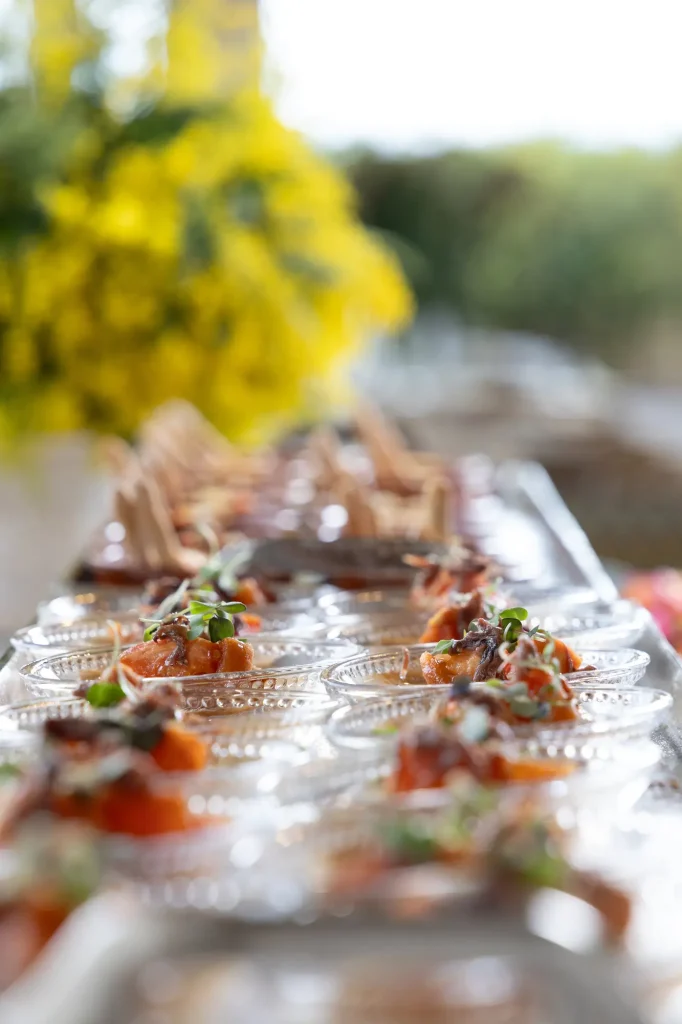
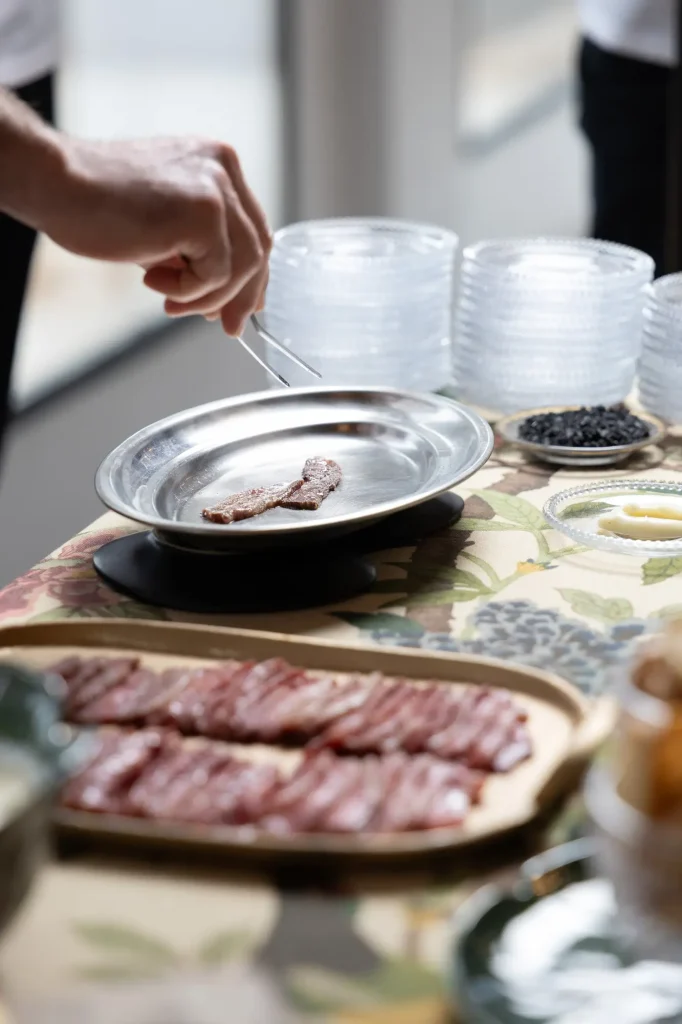
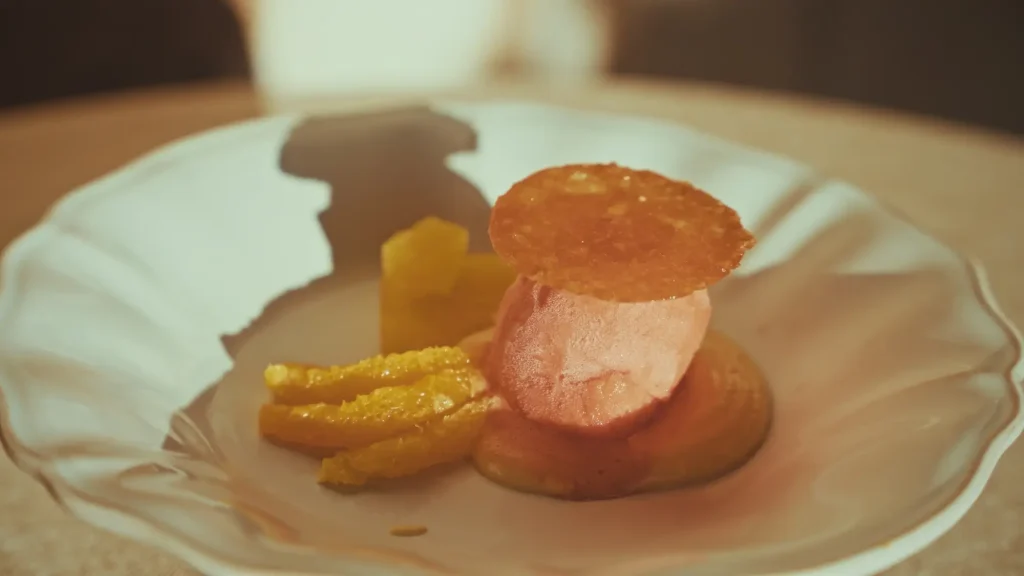
R&D&I: a kitchen that researches and reinvents itself
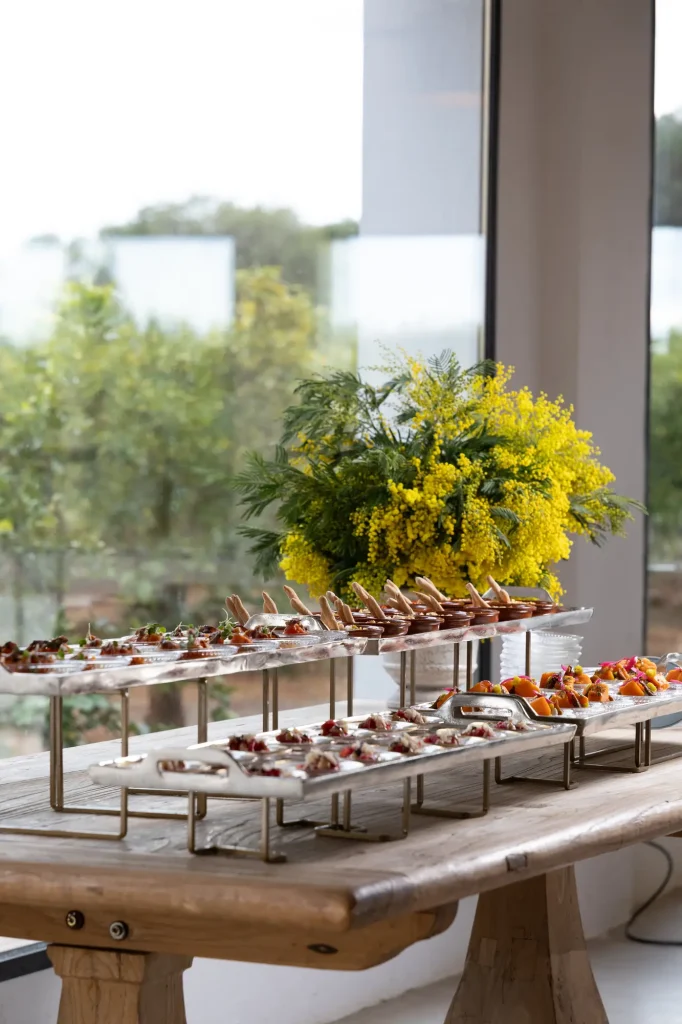
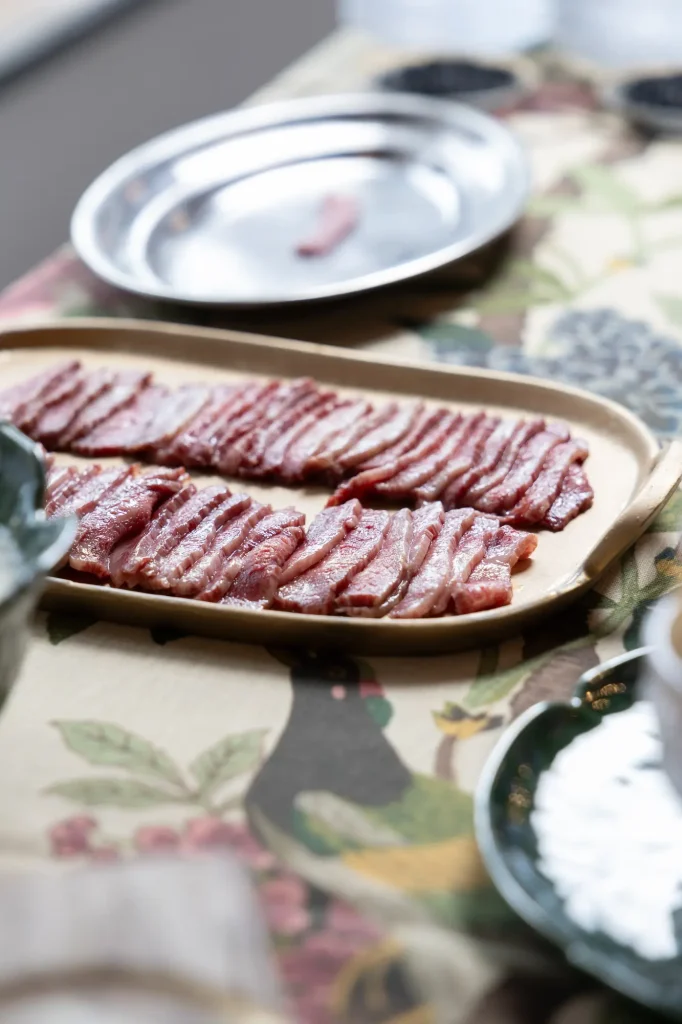
We have one of the largest culinary R&D&I departments in the Valencian Community. Its work has two fronts: developing new dishes for each season’s proposals and studying how to improve the way we cook and serve.
Part of this research is carried out with leading universities and institutions. Together with the Universitat de València, the Lluís Alcanyís Foundation, Valencia Sostenible and the Valencia Conference Centre, we are developing the MagNuS project, which studies the food waste generated at events. We are also part of the project «Promoting healthy eating and sustainable management in event organisation», winner of AESAN’s NAOS Strategy Award 2023 for Business Initiative.
The department also works according to the principles of the Chefs’ Manifesto, an initiative linked to the United Nations.
A sustainable model at every stage
Sustainability runs through the entire process, from the production centre to the end of the event. In addition to renewable energy, we have eliminated more than 90% of single-use plastics, we use reusable and compostable tableware, we recycle vegetable oils to produce biodiesel and we recover value from organic waste.
Planning quantities carefully is the first way to reduce food waste. Since 2023, surplus food fit for consumption has been donated through Naria, which manages it using blockchain technology. By 2025, this amounted to more than 11,300 kilos of donated food, around 27,000 servings and more than 92,000 kilos of CO₂ avoided. The rest goes to industrial composting or biogas generation.
This 360º model, aligned with the SDGs and the United Nations Global Compact, received the Hostelería Valencia Award for Sustainable Gastronomy in 2024. It is all detailed in our 2025 Sustainability Report. We also explain it in this article on how we control food waste at events.
From the production centre to the event venue
The final stage is taking the proposal to the celebration venue. From the production centre, the dishes travel to each venue, where the kitchen team finishes them and the service team serves them, with a single coordination for the whole event.
In the largest formats, that coordination is decisive. When catering an event for more than 3,000 guests, our warehouse sustained 48 hours of non-stop logistics activity, more than 60 large-format paellas were cooked at the same time and more than 450 professionals were involved.
This process is repeated at the venues we manage exclusively, such as La Cartuja de Ara Christi or Masía del Carmen, at those where we are the culinary partner, such as the Palau de les Arts, and at private estates and homes.
Every dish that reaches the table is the end of a journey that begins long before, in our kitchen. If you are organising a wedding, a corporate event or a celebration, our team will design a menu tailored to your event.